
Indiana Jones and the Great Circle review for Nintendo Switch 2
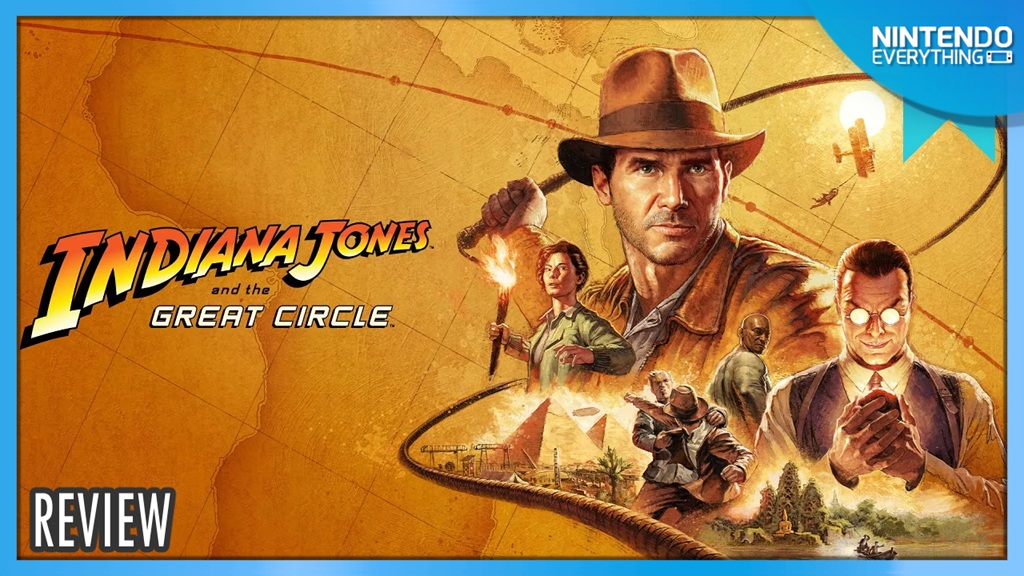
System: Switch 2
Release date: May 12, 2026
Developer: MachineGames
Publisher: Bethesda
As fun as it is to watch Harrison Ford hunt down ancient relics in the old Indiana Jones films, it’s really Indy’s video games that are the relics these days. It’s been a long time since we’ve had a good one, and after playing the incredibly middling Staff of Kings back in 2009, I feared we’d probably never get another. For many years, we didn’t, until in 2024 when Swedish studio MachineGames released a bold new type of Indiana Jones game: one that’s played almost entirely in first-person. Now, that experience has landed on the Nintendo Switch 2, promising a globetrotting immersive adventure that puts players in the archaeologist’s well-worn shoes – and, somehow, on a portable console to boot.
When I first saw Indiana Jones and the Great Circle, I was definitely uncertain about whether a game like this would feel right as a first-person experience. Perhaps I had just gotten too used to the way that games like Uncharted and Tomb Raider tended to present their action, but something about inhabiting such an iconic character from such an intimate point of view felt too far-fetched for me. Maybe in the hands of a different team things wouldn’t have worked out, but MachineGames didn’t just pull it off; they ended up creating what has become my new favorite Indiana Jones story, full-stop.
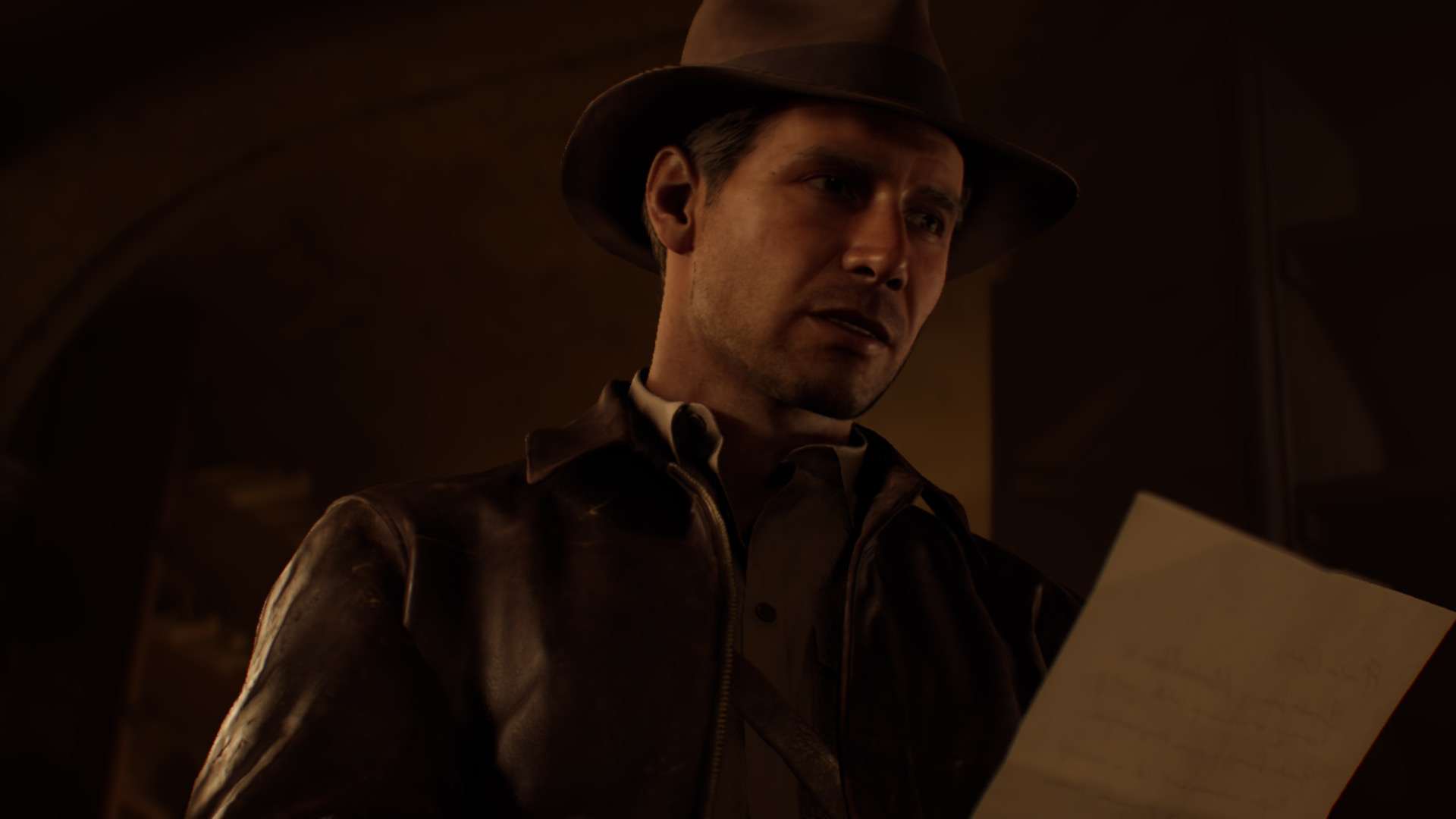
The crux of Indiana Jones and the Great Circle is that one night, a thief breaks into Indy’s offices at Marshall College and steals a mummified cat from the museum’s collection. It’s a strange thing to steal out of a room filled with so many valuable artifacts, so Indy sets out to try and discover who took it and why. This being an Indiana Jones game set during the late 1930s, it isn’t long before Indy realizes that a group of fascists (both the Nazis and the Italians this time) are involved, and that this wasn’t a random theft. This is what leads him literally around the world, to a series of famous historic destinations and natural landmarks, to try and uncover the connection between them and put a stop to whatever abhorrent thing the regime is trying to do.
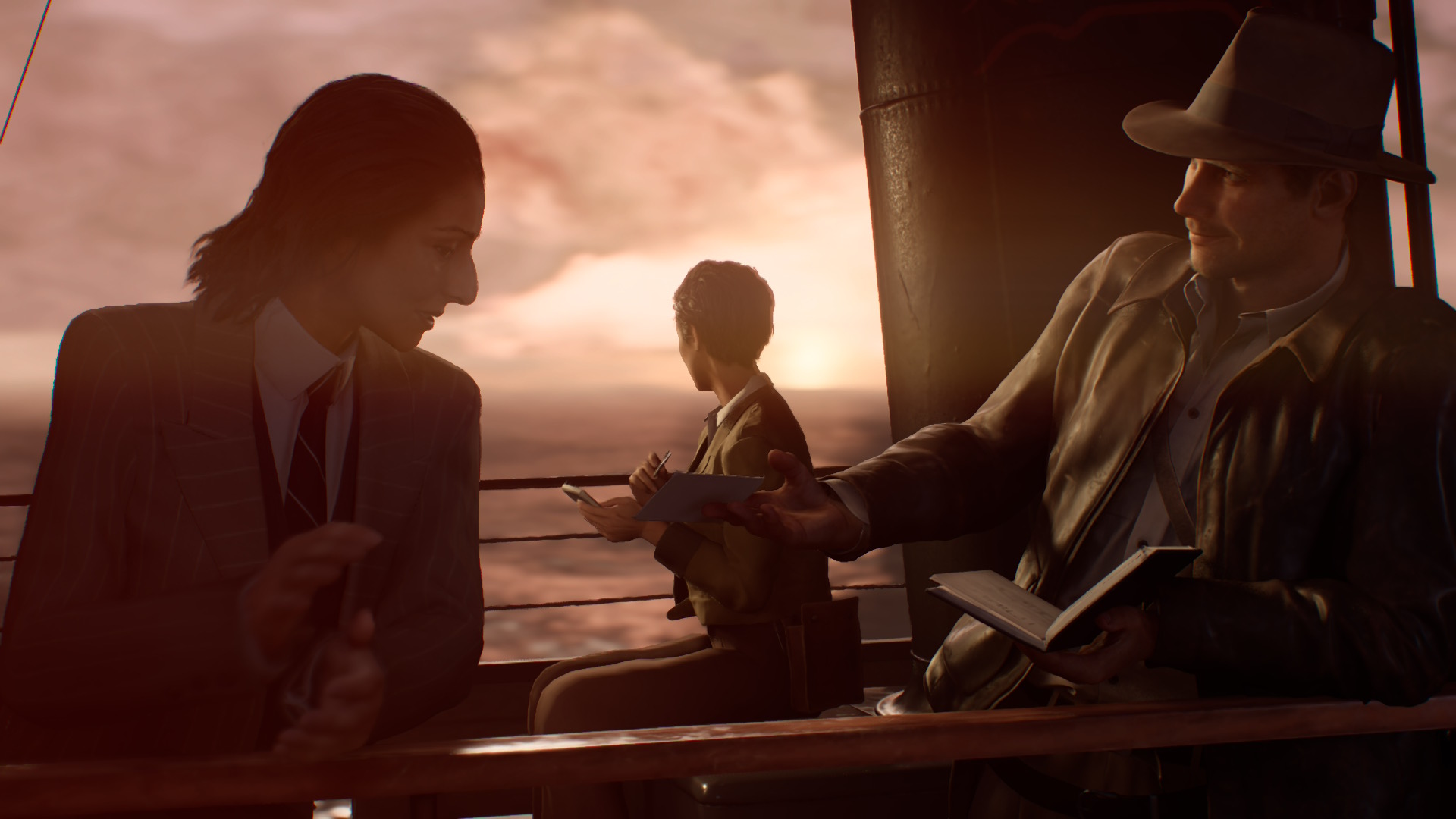
The reason this particular Indiana Jones story is so compelling is not because it is breaking significant new ground, but because the length of the game allows it to be told with far greater detail than a movie could accomplish. Indy himself is mostly the same old dude (portrayed very convincingly by Troy Baker), but the side characters who he interacts with get far more screen time than they would in an Indy film, so they feel more fleshed-out and integral to the plot. There’s more space for them to breathe between set pieces; we get plenty of moments when a wisecracking Jones banters with his co-adventurer, but also a lot of quieter moments, too. Even among secondary characters, performances and writing are incredible across the board. The main villain is a horrible person (he is a Nazi, after all), but its that perfect balance of despicableness and comical ineptitude that keeps the stakes of the narrative high, but the tone light.
That sense of authenticity is complemented by the game’s soundtrack, which seems to chime in at exactly the right level and exactly the right moments. The playful but cinematic orchestration feels ripped right from an Indiana Jones movie, but importantly, its not overdone to the point of fatigue. Little teases of it play when the player enters a mysterious new zone, or solves a puzzle, but for the biggest, most exciting moments, the score gets dialed up to 11. Placed alongside the outstanding environmental sound design, and the occasional moment of comedic timing, it just hits all the right notes.
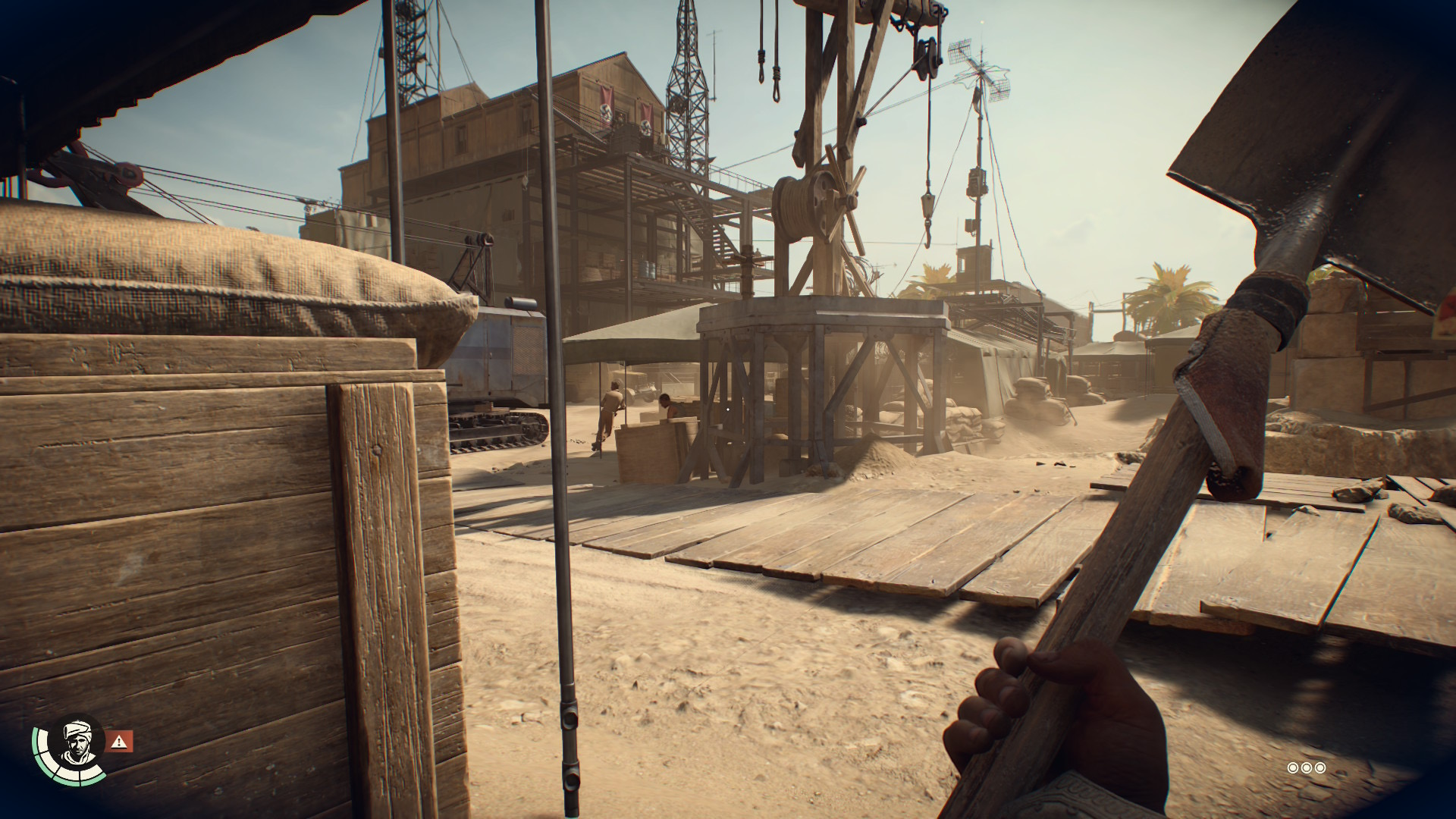
Indiana Jones and the Great Circle may be first person, but it’s no shooter – it’s built as a proper adventure game. Yes, there is shooting and fisticuffs, but there’s so much more beyond that. You’ll explore dark, claustrophobic ruins and caverns filled with traps. You’ll decode mysterious symbols and snap photos of iconic real-world historic sites as you wander through bustling villages and excavation pits. You’ll slink through Nazi-infested facilities, eavesdropping on conversations and pummeling fascists over the head with whatever’s nearby. You’ll meet allies, each with their own motivations, who’ll get you out of tight spots – and sometimes, into them. These are all core aspects of the movies, and the game replicates them to an astonishing degree while also feeling like an original experience.
The game will take players to many different locales, and while some of them are more linear and narrative-focused, a chunk of them are large open maps that allow players to venture off the beaten path. There are entire optional underground crypts to explore, Nazi outposts to raid, and puzzles to solve that are off the beaten path. The main story isn’t particularly long on its own – perhaps a healthy 15-20 hours or so – but players who really want to see and do everything could easily double that, at least, depending on how quickly they like to explore. Just as a frame of reference, I probably spent ten hours in the game’s first major hub of the Vatican by itself, and less than half of that was following narrative beats. Because of how open-ended some of these maps can be, this does occasionally result in situations in which I’d enter an area before the story would have normally brought me there, which means returning there later on mitigates some of the impact of getting there for the first time. This mostly happened because I was having so much fun hunting down field notes for Indy’s journal, or weird relics tucked in hard-to-access spots, so I suppose it’s a testament to how enjoyable all of that was that I didn’t really mind how my playstyle would occasionally interfere with the narrative flow of the game.
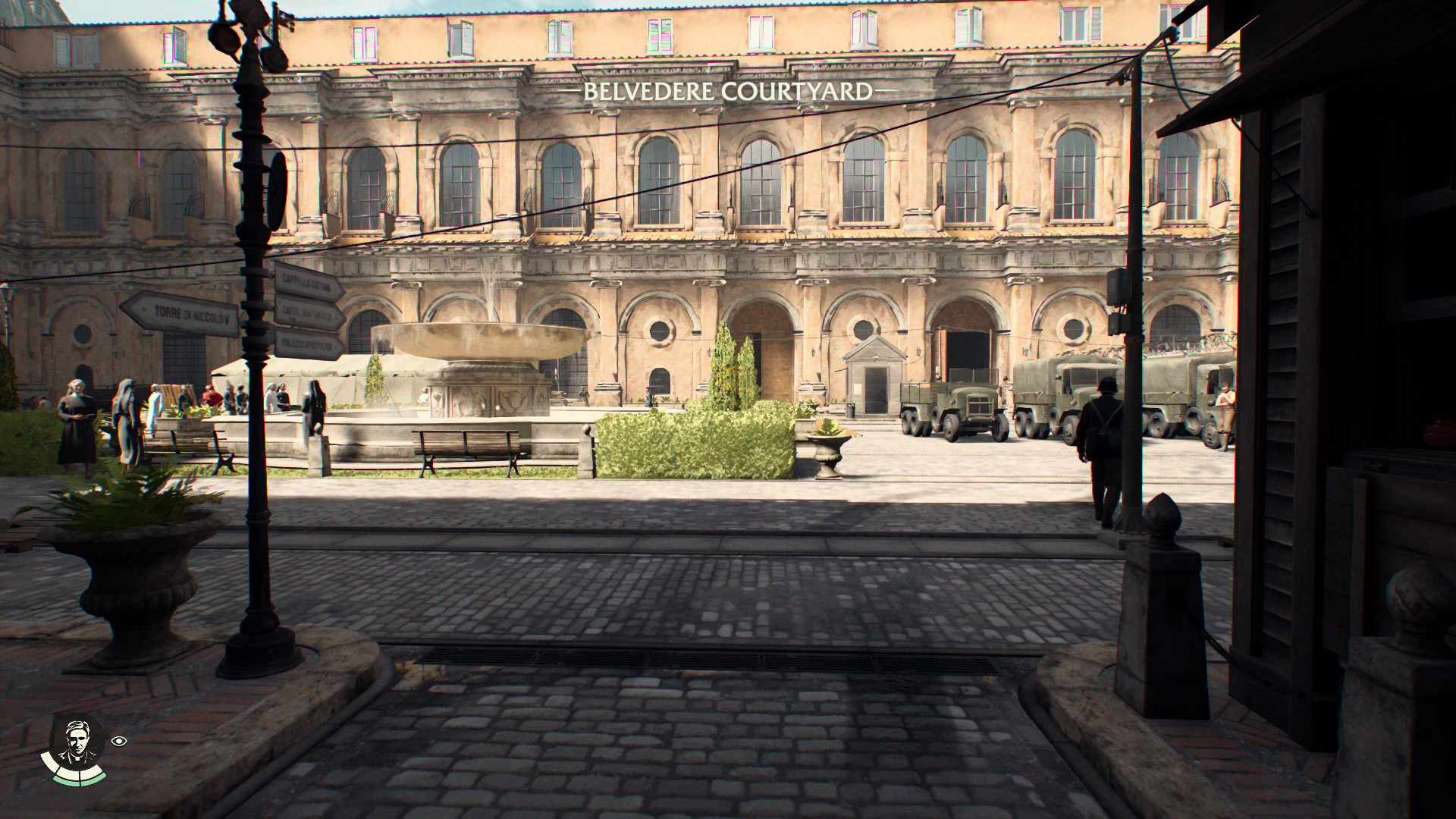
The word “immersive” is thrown around a lot when describing games, something I’ll admit of being guilty of myself, but Indiana Jones and the Great Circle truly earns that label. A big part of that comes down to the way the game creates a unique sense of place at every turn. Whether I was navigating a boat through the flooded jungles of Southeast Asia or exploring the cramped corridors and alleyways of the Vatican, the level detail on display is truly staggering. In naturally busier environments like market squares and military bases, there’s activity in every direction – workers building things, nuns praying, a storyteller entertaining a group of kids. Elsewhere, interior spaces feel lived in, cluttered and worn. There are just so many collectibles to find and neat little areas to poke around that even when I didn’t have a reason to go somewhere, I couldn’t help but want to poke into every nook and cranny just to see if there was something cool or useful there. And usually, there was!
Of course, Indy can’t just roam around completely without consequence. There are plenty of areas that are restricted, and where guards will attack on site. Stealth is an option, of course, but can be tricky. Even on moderate difficulty settings, guards will spot Indy from pretty far away, and will investigate pretty quickly if they see him for more than a moment, with combat essentially guaranteed if the player fails to get out of sight quick enough. Assuming you don’t get spotted, it is extremely satisfying to be able to pick up whatever household objects are lying around and use them to clobber a Nazi from behind. Its especially funny when said object is an acoustic guitar, a toilet plunger, or a large broom. There’s also a simple but satisfying disguise system, which lets Indy dress up based on the environment he’s in to better blend in with the general populace, or the guards themselves. It’s a safety net, but not a foolproof one, as more experienced guards will see through it, so using it feels like equipping another tool in the toolbox rather than entering a cheat code.
If things do escalate to full-on combat, Indy can still use whatever he finds lying about to deal damage, but most objects will break fairly quickly, so he’ll have to use his fists most of the time. Indy can let loose a flurry of punches via the triggers, or charge up his punch to break through blocks and knock down foes. He can also himself block certain attacks, but cant do so indefinitely due to a stamina bar, which also limits movements like sprinting and climbing. He can even use his whip to pull in enemies before literally, visibly beating the snot out of them. There’s a ton of opportunity for fun sandbox-style moments, too. I once picked up a stick of dynamite, lit it at a nearby flame, threw it at a group of guys, and shoved the dude next to me off a ledge in the span of a few seconds. It can be genuinely funny at times, as a good Indiana Jones fights scene should be!
There are guns in the game, but I found using them to be a poor idea more often than not. It’s not because they feel bad to use – they actually feel quite robust and accurate – but rather that Indy is no BJ Blazkowicz. He can’t take much damage, he isn’t fast, and he never has access to a ton of ammo. Firing off a gun is a quick way to alert everyone in a base to your presence, so there’s a lot of risk involved, and I found it usually more fitting to go about combat a different way. Plus, Mr. Jones isn’t exactly the type to mow down dozens of people with a machine gun. (That said, he definitely kills some people in this game, but its usually played for levity.)
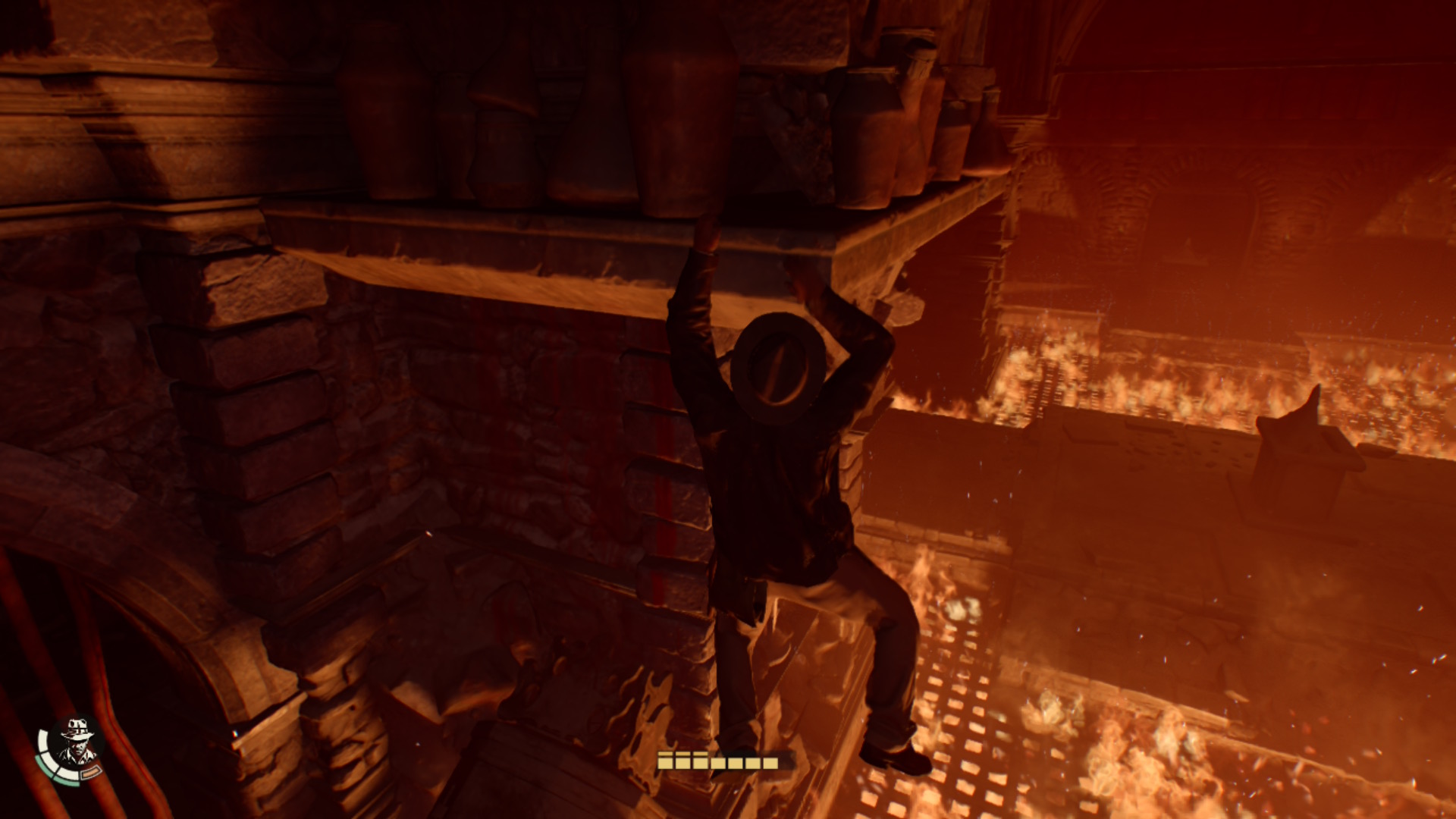
Beyond combat, Indy will do a lot of climbing and swinging around with his iconic whip, which is fully intact in this game with its signature thwack sound. He’s also no Nathan Drake, though, and is quite lacking in grace and style. The camera usually pulls out to third-person in these sequences, and he moves quite heavily and slowly, so these sequences don’t feel great. I also found it trickier to gauge jump distance in third person, whereas it feels consistent at least in first person. But it’s a minor nitpick, overall.
Over time, there are opportunities to upgrade Indy’s survival and combat skills, too. Adventure Books can be found around the game world, or purchased with cash that Indy raids from desks and bedside tables. Each book will upgrade something about Indy’s moveset or resilience – this can range from improving his health bar, to granting him the ability to disarm foes with his whip. Once a book has been obtained, its attribute can be unlocked with a separate form of in-game points that are awarded to the player by solving puzzles, photographing cool places, or simply advancing the story. It’s a great progression loop that particularly rewards more through players, who will be able to unlock things faster by exploring more. The upgrades all feel meaningful, too, so unlocking a new one has a noticeable impact. I love that these upgrades are contextualized within the game world as books that Indy picks up and reads, rather than just being yet another skill tree to click through. That design ethos carries over to other elements too, like the map, which Indy carries with him in is journal, and which the player needs to physically look down at while walking. Those little touches contribute greatly to immersion within the game..
All of this running on Nintendo Switch 2 is immensely impressive. This game is up there next to Cyberpunk 2077 in terms of overall porting quality, but of course, changes had to be made to get the game on the system. The game’s output resolution is only up to 720p in handheld, and 1080p in docked – not uncommon for ambitious Nintendo Switch 2 ports, but still a bit of a bummer. Textures don’t always load quite as quickly as they always should when turning the camera, especially in more open outdoor environments, where there is noticeable pop-in. Foliage and distant structures have had their visual details cut down fairly substantially, which can cause them to look artificially soft or waxy.
On the other hand, a lot of the little visual details you might not expect to see retained from the Xbox and PlayStation versions did still get translated into the Nintendo Switch 2 version. The game has excellent ray tracing and lighting effects across the board, and it noticeably enhances the game’s atmosphere. Sparks flicker off the edges of torches and open flames. A significant amount of in game objects have physics applied, meaning indie can pick up and throw just about anything – something that comes in handy in combat. It’s little things like this that help the port maintain a lot of its splendor and sense of scale. There are also a few Nintendo Switch 2 specific features here like mouse controls, which work well enough, although they were not my preferred way to play for a game like this with relatively layered controls.
I was less enthused with the game’s frame rate. While the game targets 30 frames per second, it really only manages to consistently hit this benchmark in handheld mode. In docked mode, I experienced consistent stuttering throughout my playthrough. Some environments fare better than others – I had few issues in Egypt’s deserts and in most of the game’s tombs, but significant drops in the game’s first major hub of the Vatican, which is dense with people and buildings. Sometimes, even when there wasn’t a lot of action, something as simple as turning the camera slowly could cause the frame rate to drop. I can forgive this occasionally, but it happened during my playthrough way more often than I would have liked. Also noticeable is that NPCs who are a great distance from the player have their frame rates cut down well below the game’s target. If you remember the infamous “windmill controversy” that got Pokémon fans riled up a few games back, you know exactly what I’m talking about.
I experienced a few other technical issues here and there, too. My game got softlocked once in the Vatican, causing the screen to go black every time I tried to enter a particular room. In another instance, the game crashed outright when I threw a weapon onto the floor. These, fortunately, were one-off issues for me, but when combined with the frame rate issues, it did take some of the luster away from the overall experience. It was never so bad that I wished I had been playing on a different platform, though.
While some of this did put a damper on my playthrough, its fortunate that the overall quality of Indiana Jones and the Great Circle is so high that I still ended up having a great time. As I approached the end of the game, I felt like I had just discovered some long-lost Indiana Jones film that had somehow never been released until now. If you’re a fan of the franchise looking to experience more of it, this feels like an essential part of the canon now. And if you’re not, there’s still an amazing time to be had here.

Indiana Jones and the Great Circle is an incredible experience from start to finish, so thoroughly crafted with the spirit of the Indiana Jones but never lacking in surprises, either. Whether I was descending through catacombs, narrowly escaping a lethal trap, rescuing a hostage or solving a clever environmental puzzle, the varied moment-to-moment gameplay combined with a series of beautiful, detailed regions to explore really sucked me into the adventure. The Nintendo Switch 2 version does have some noticeable visual cutbacks from other versions of the game, most notably when it comes to the frame rate while playing in docked mode, and if it weren’t for some of these issues it would probably be my preferred version. But as it is, Indiana Jones and the Great Circle is still one of the finest modern first person adventures I’ve ever played, perfectly balancing action, stealth, and exploration with all the wit and charm of Indy’s greatest movies. This one doesn’t belong in a museum; it belongs in your library.
Indiana Jones and the Great Circle copy provided by the publisher for the purposes of this review.


