
Fatal Frame 2: Crimson Butterfly Remake review for Nintendo Switch 2
System: Switch 2
Release date: March 12, 2026
Developer: Team Ninja
Publisher: Koei Tecmo
There’s that first moment, in every great horror game, when the player reaches that dark room… you know, the one that’s just a bit darker than the ones that came before. You have to enter the room, of course; it’s the only place left to go. You’re running low on resources, so in the back of your mind, you worry something is going to jump out at you and finish the job. Reluctantly, you press forward… and nothing happens. Fatal Frame 2: Crimson Butterfly Remake does this a lot. So, you breathe a sigh of relief, and enter the next room… and that’s when the exact thing you were dreading happens.
Team Ninja’s remake of Fatal Frame 2 quickly managed to both terrify and intrigue me, and very successfully on both counts. It takes a lot for a third-person horror game to get under my skin – typically, I find that first-person affairs are much more threatening – but the Fatal Frame games have always excelled at making the player feel powerless in the face of some unknown, otherworldly power. And of the three games in the series that I’ve played – the fourth and fifth entries, and this one – Fatal Frame 2: Crimson Butterfly Remake is perhaps the most unsettling of them all, while also managing to tell a personal, tragic story that becomes increasingly depressing over time.
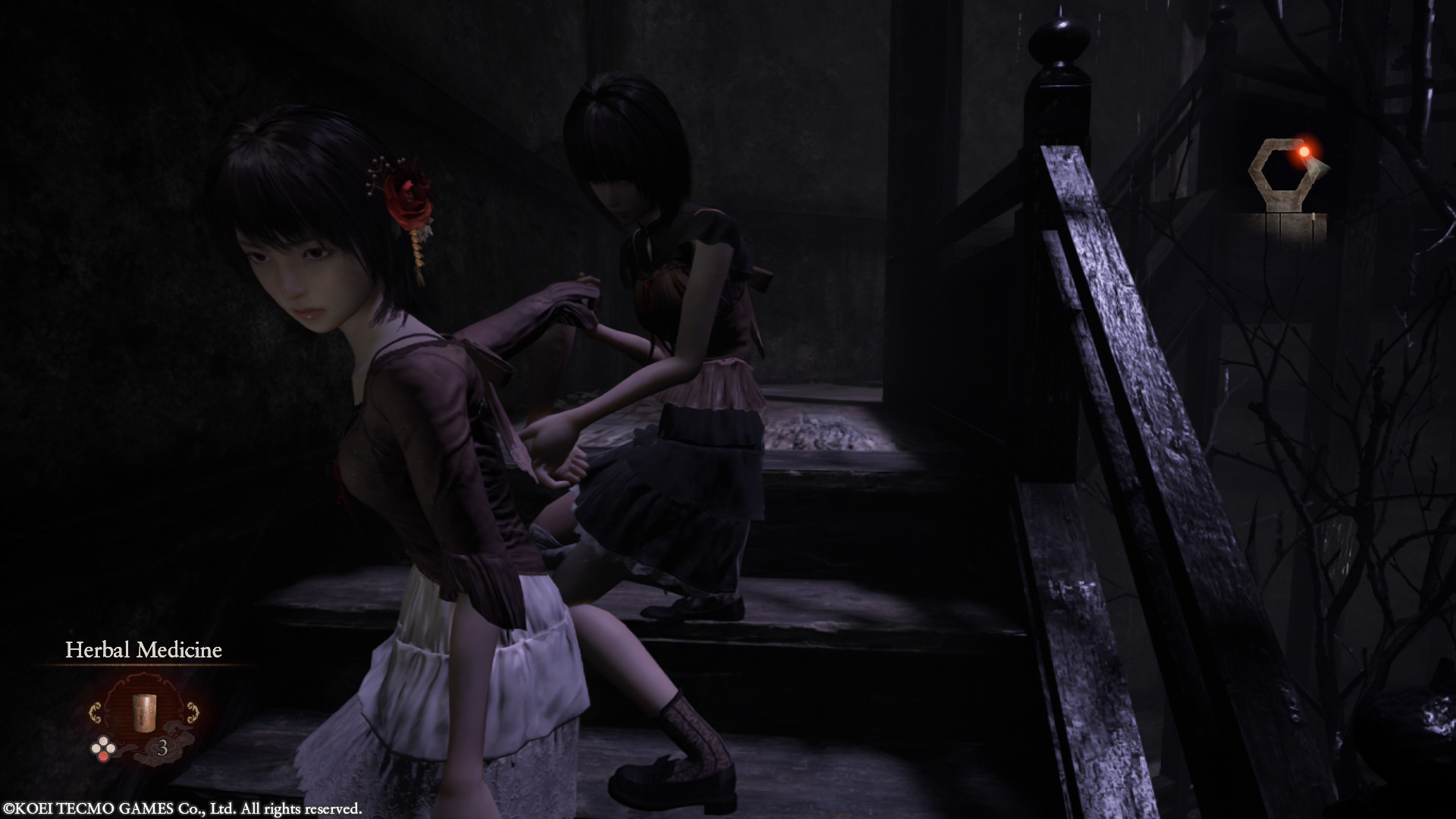
Moreso than other recent releases in the series, it’s also a great entry point into Fatal Frame. Crimson Butterfly tells a largely self-contained story that follows Mio and Mayu Amakura, two sisters who, while visiting the woods they played in as kids, find themselves lured to a desolate village that’s been erased from the maps. The village is shrouded in a never-ending night, and is seemingly long-abandoned. Unable to retrace their steps, what begins as a search for an escape quickly turns into a desperate rescue mission, as Mayu is repeatedly lured deeper into the village by a relentless paranormal force.
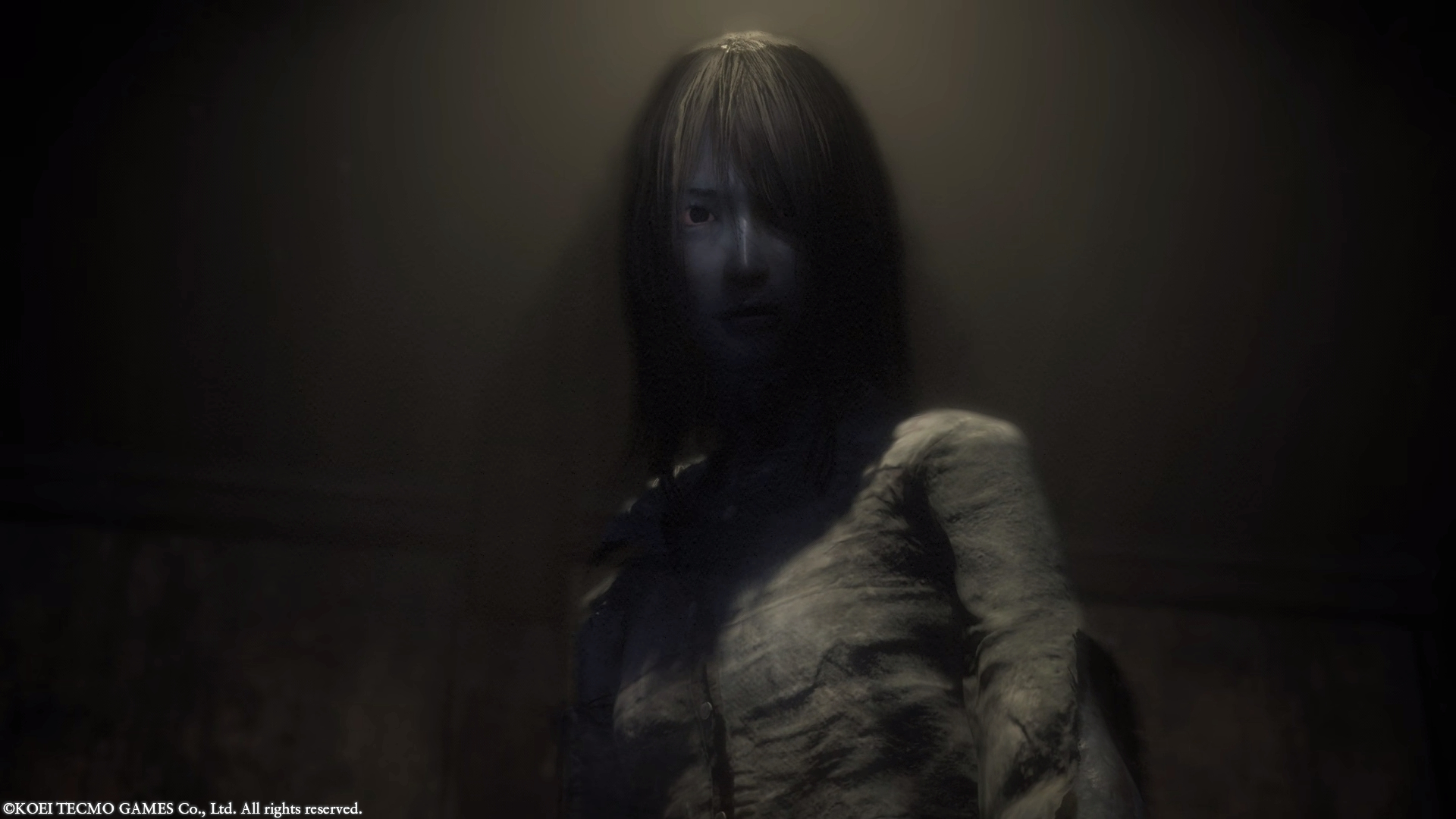
Needless to say, for much of the game, Mio is alone. It never feels like she is, though. The game always manages to make the player feel like Mio is being watched, like something is stalking her as she moves from one decrepit building to another. Sometimes, that’s exactly what’s happening. Minakami Village is filled with the ghosts of its long-deceased inhabitants, and most of them will attack her on sight. The ghosts behave as you’d expect, popping through walls out of nowhere and occasionally getting right into her face when she opens a door. The ghosts are hunting her, to be certain, but also toying with her – and by extension, the player. Their behavior does become a little predictable as the game runs its course, but more often than not, they managed to catch me off guard even when my defenses were on high alert. Running isn’t always an option, either.
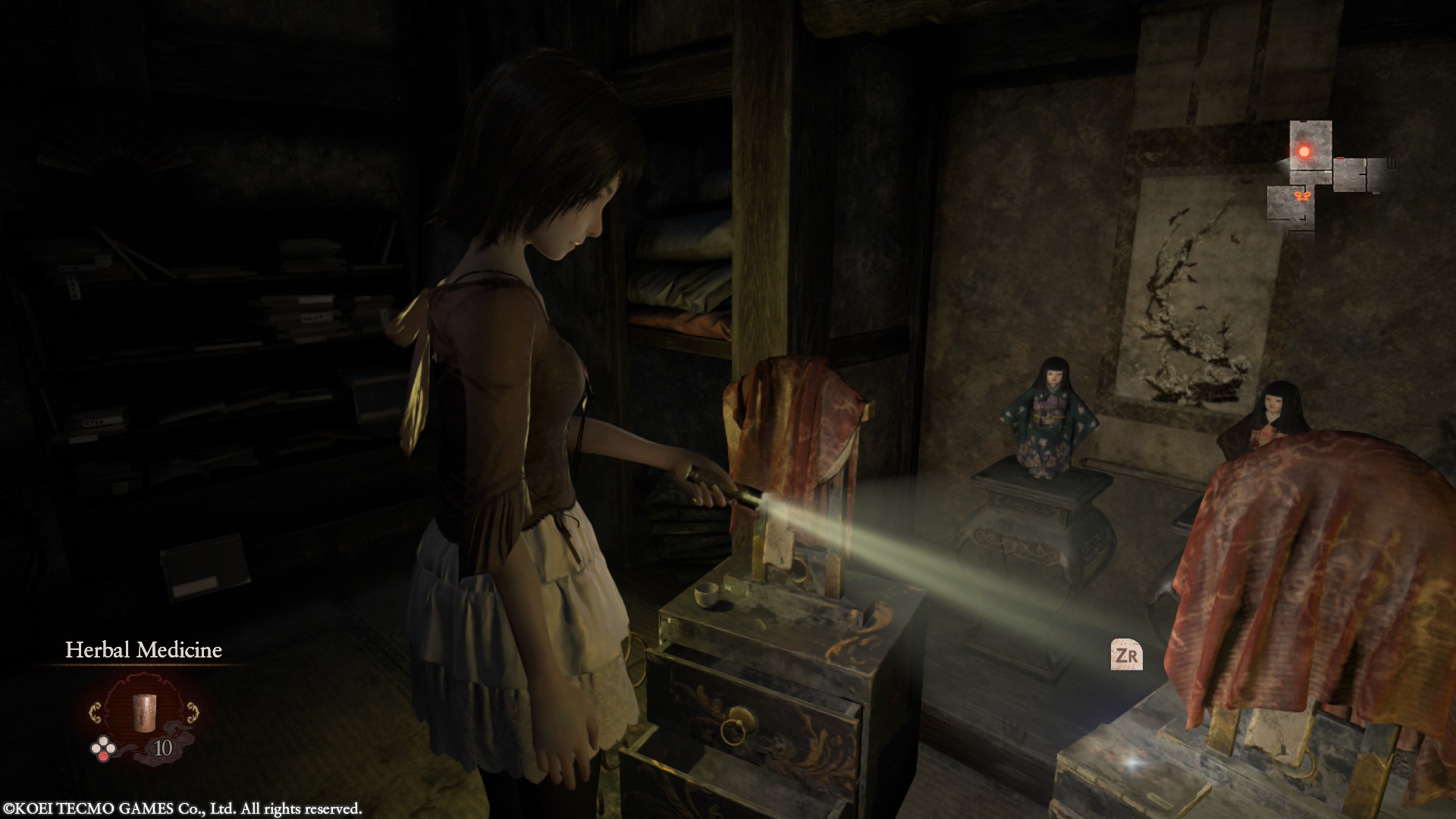
The way Minakami Village is designed lends itself very well to setting up these claustrophobic scenarios. While it’s not a large map, the various crumbling homes Mio must trudge her way through often feel labyrinthine by design, even though progression is ultimately linear. I never felt completely lost (as I sometimes did in Fatal Frame 4), but I did often feel disoriented, uncertain if the lead I was following would take me in the right direction. Perhaps it’s not a good feeling, but in the context of a game like this, it’s incredibly immersive. The village itself is also a key part of Crimson Butterfly’s core mystery. Most of the ghosts who inhabit it aren’t mere random specters, but instead vital pieces of the puzzle of what happened in this place so long ago. The story is mostly conveyed through notes scattered around the village, rather than cutscenes. Typically, I dislike when games rely on this as their main means of storytelling as it often feels like a compromise, but in the case of Crimson Butterfly Remake, the convincing writing really helps sell the atmosphere the game works very hard to create. Perhaps it’s trite to say, but the village really does feel like a proper character in of itself – one that has seen better days.
Fortunately for Mio, it isn’t long before she stumbles across the Camera Obscura. The only weapon she’ll ever wield, the Camera Obscura is her main way of interacting with the world and fighting back against the spirits that haunt Minakami Village. Hostile spirits can be damaged by loading film into the camera and taking photos as they get close, with different types of film dealing more or less damage, or taking longer or shorter to recharge between shots. Unlike the latest entry in the series, I never felt powerful while wielding the Camera Obscura in Crimson Butterfly Remake. It can be a bit clunky and awkward to use, but that’s somewhat the point. To have any chance at doing damage on an enemy, the camera has to charge up a shot, focus on the spirit, and be close enough to the foe to properly hit it. Combat encounters are a game of patience, waiting for the right moment to strike. If you land a shot right before an enemy manages to grab you, you might also land an eponymous Fatal Frame attack, dealing significant damage and creating a rare opportunity to chain a few shots together. There’s really nothing else quite like it in video games, let alone horror games. It’s tactile, intentional and mechanically plays unlike any other combat system I’ve experienced.
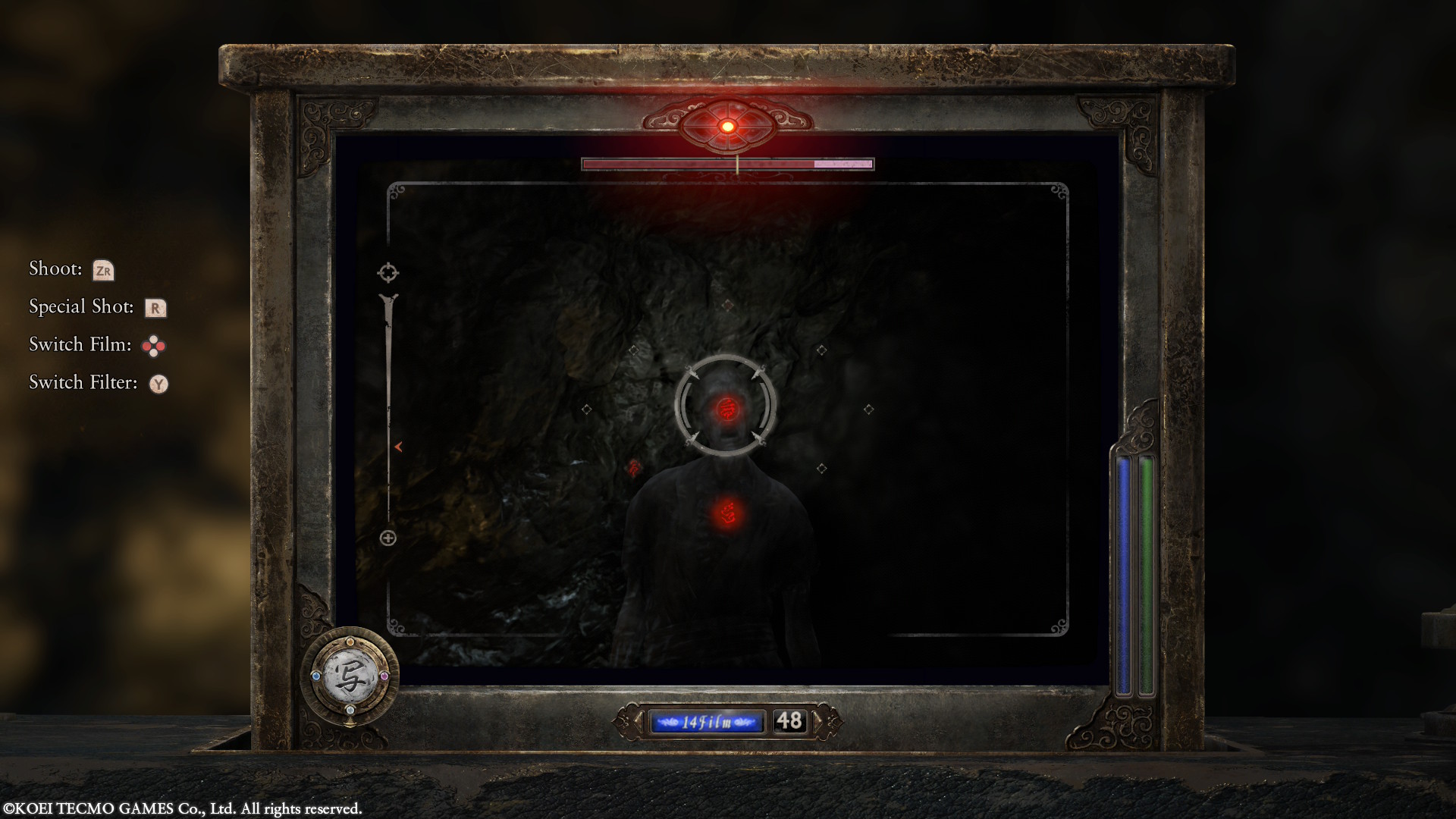
New to this remake are some additional options for how to use the Camera Obscura. The ability to manually focus and zoom the camera, rather than relying on it to do this automatically, can be unlocked, and in theory allows the players more control. However, in the heat of an already tense encounter, juggling those features is less than optimal as the default control scheme all but requires the player to take their thumb off the control stick to manipulate these functions. It adds tension, but often doesn’t feel necessary. This is especially true after the player manages to upgrade the Camera Obscura in other ways, such as by increasing the camera’s autofocus responsiveness or its ability to quickly charge up its next shot. These upgrades are expensive, and in a somewhat annoying move, the pace at which Prayer Beads – this game’s upgrade currency – are unlocked leans heavily towards the back half of the game.
It’s a similar story for the Camera’s filters, which are also new to this remake. These have unique attributes, but generally act as ways to deal additional damage when used correctly in different combat situations. They can also open up opportunities to inflict temporary status effects on enemies, such as blinding them or slowing them down. I didn’t often need to use these special shots, but the filters are also used in exploration, allowing Mio to uncover hidden paths (including to a handful of small new areas exclusive to this remake) or valuable pickups. I enjoyed that while the game tells you how to use these filters, it’s largely up to the player to pay attention to the environment and seek opportunities to do so. But as combat tools, with only a few exceptions, they don’t change up the game too much.
Unfortunately, combat in Crimson Butterfly Remake is a bit rough around the edges the edges, mostly due to the fact that some of the enemies feel like they just take forever to fully dispatch. And I’m not talking boss battles, but just your average, run-of-the-mill nasties. Even with skilled play – trying to strategically frame up my shots, and using the right types of film for each encounter – there were more than a handful of foes that just took way too long to take down, to the point where it just became frustrating. This is made worse because in any battle, there is a chance that the ghost you’re fighting will become aggravated. When it does so, it not only deals more damage and moves faster, but also regains a significant portion of its health. It feels like an arbitrary punishment, and when playing on Normal difficulty or higher, it often feels like it happens in the vast majority of encounters. In a game in which resources are already scarce to come by, little feels worse than burning through a good chunk of your film in a situation like this. It becomes less of a problem as the game goes on, but it was enough to have me drop the difficulty a notch for most of my playthrough, just so I could progress without unnecessary frustration.
Setting aside that gripe, overall, Crimson Butterfly Remake benefits from being a narratively and mechanically simpler game than the titles that followed. While I can appreciate how the other entries tried to tell a story from multiple different perspectives and playstyles, I think I prefer this title’s more singular focus. It makes the whole game feel more intimate and less sweeping, which I think is exactly where a series like this is at its strongest. And while there’s still a decent amount of backtracking, it feels much more purposeful in its design and as a result, more interesting to experience. The game’s themes are, I would argue, not even necessarily as dramatically dark as those in other ones in the series, yet because of the game’s tighter pacing and narrative focus, in some ways they hit me a bit harder. I doubt I’ll feel compelled to replay the game for the sake of experiencing its other endings (including a new one added to this remake), but that’s no slight on the experience itself – I just can’t imagine the story hitting me nearly as hard a second time around.
The game also excels when it takes power away from the player even further. There are a handful of foes that can’t be killed with the Camera Obscura’s standard features, and will pursue Mio relentlessly if they see her. They’re capable of killing her the moment they grab her, so Mio has no choice but to find a place to hide. It’s never as intense as in a game like Alien: Isolation, because these powerful spirits are much more limited in where they appear and how they behave, but they absolutely make Mio’s journey significantly more harrowing to navigate her through.
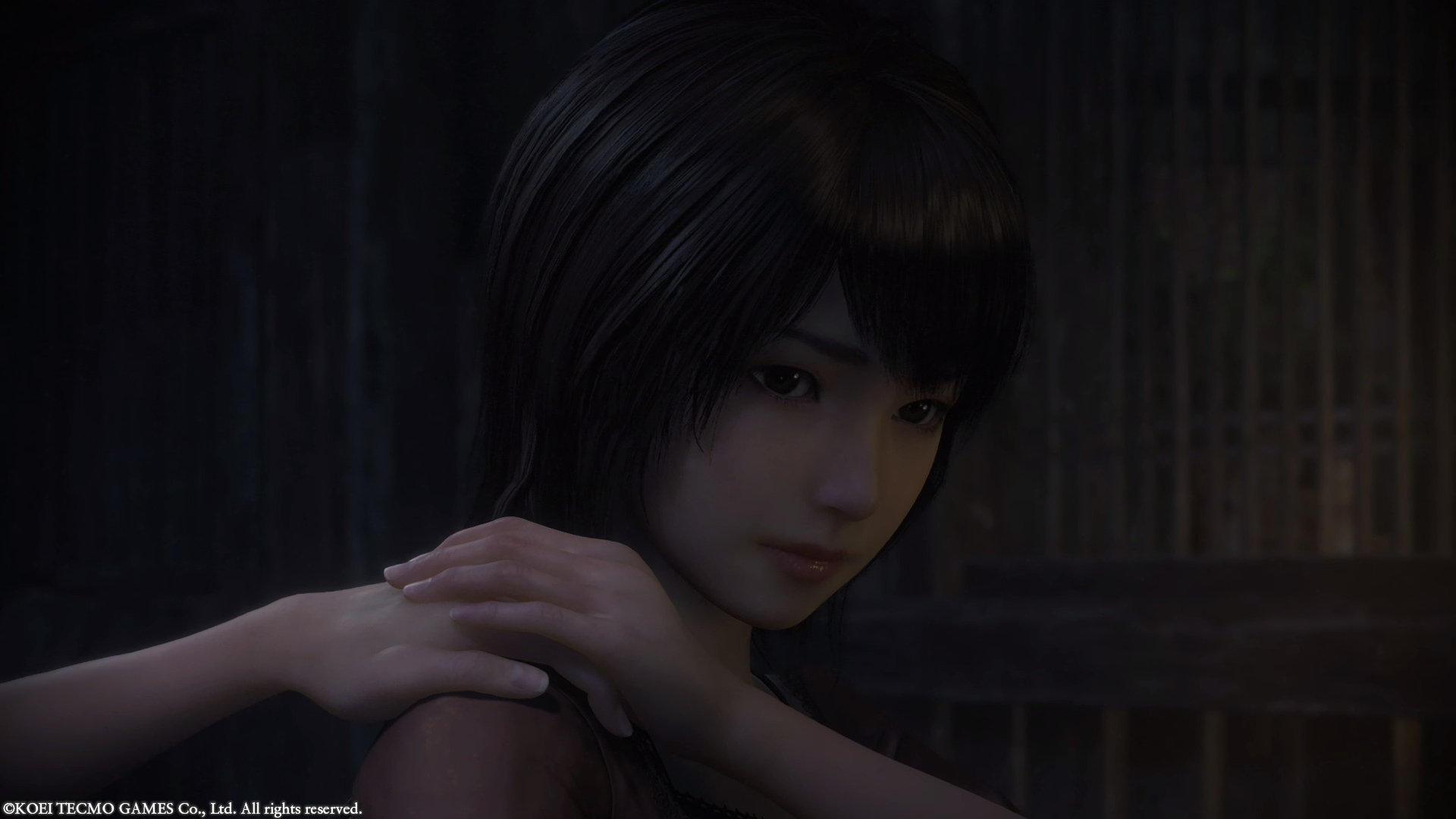
Visually, while Crimson Butterfly Remake can have its moments in which it impresses, it’s the game’s atmosphere and art direction that enhances the experience rather than sheer visual prowess. Even with that in mind, I did find this remake lacking in some respects. Not only does the game not run at Nintendo Switch 2’s full resolution in neither docked nor handheld mode, it often struggles to maintain a consistent frame rate, frequently dropping below thirty frames. It happens most often while outside and in the game’s cutscenes, and while it’s not game-breaking, it’s far from the most impressive performance when compared to other similar titles on the platform. There’s an admirable amount of environmental detail, but it honestly doesn’t feel like a huge step up from what the original Nintendo Switch was capable of. More distracting is the frequent visual pop in, in which entire objects tend to appear only a few feet in front of Mio, which is far more immersion-breaking. (And no – that pop-in has nothing to do with the game’s ghosts). I also think the film-grain effect is a bit much, even if it is thematically fitting, but there’s no way to adjust it in the Nintendo Switch 2 version. Overall, though, if you’re interested in this game, the Nintendo Switch 2 is still a fine way to play it – but this series seems to regularly run into these types of technical shortcomings, which is a shame.
Also, with this being a remake, it’s worth calling out some of the other new additions. The most notable of these for me, other than the new visuals and combat options, were the new side stories that provide more backstory into the lives that previously inhabited Minakami Village. The ones I did experience were as captivating as anything in the main story, fairly lengthy, and typically culminated with some interesting lore or a unique spirit encounter, which was always exciting. I also enjoyed hunting down Twin Doll statues, which, when photographed, unlock additional items that can be purchased at Save Points. Most of these items are simple charms that slightly modify how combat encounters play out (another new addition) or are filters for the new in-game photo mode, so I wouldn’t say they change the game or anything like that, but they fit with the game’s creepy atmosphere and provide something else to interact with when poking through Crimson Butterfly Remake’s intricate environments.

Fatal Frame 2: Crimson Butterfly Remake is an excellent version of a thrilling horror game, and it’s my favorite in the series to date. While it has a few technical and mechanical shortcomings that do occasionally hamper enjoyment, this game’s worldbuilding, pacing, and delightfully dark atmosphere make it among one of the most tense and riveting third-person horror games I’ve ever played. The way the mystery slowly unravels as Mio wards off increasingly hostile specters through its small but intricately derelict village had me on the edge of my seat during my 19-hour playthrough. In my eyes, this title represents what Fatal Frame is all about, and feels all but essential for horror fans with a taste for Japanese ghost stories – as long as you can tolerate some hiccups along the way.
Fatal Frame 2: Crimson Butterfly Remake review copy provided by the publisher for the purposes of this review.


