
Monster Hunter Stories 3: Twisted Reflection review for Nintendo Switch 2
System: Switch
Release date: March 13, 2026
Developer: Capcom
Publisher: Capcom
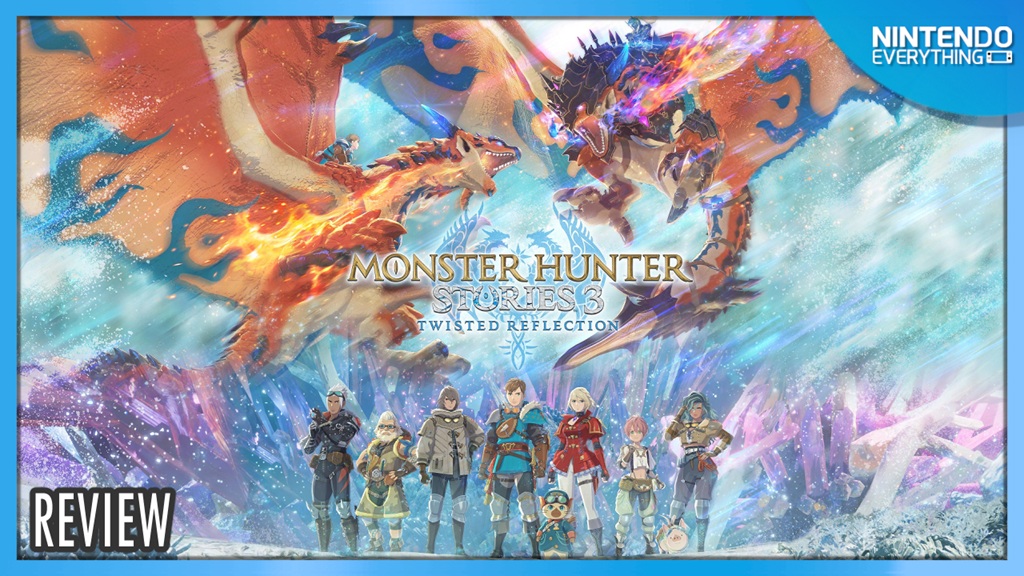
For many years, Monster Hunter has been about slaying towering creatures and using their parts to slay even more massive behemoths. The Monster Hunter Stories series flips that idea on its head, instead letting players befriend, raise, and fight alongside those same creatures. Monster Hunter Stories 3: Twisted Reflection continues that tradition, offering a new perspective on the world and culture that makes the series’ universe so compelling – but is the world just as thrilling when the goal isn’t to slay monsters, but to bond with them?
Monster Hunter Stories 3 opens with a deeply personal story centered on the heir to the Kingdom of Azuria. The young Rider protagonist is the child of two powerful figures: the King of Azuria and a Queen who once belonged to the rival kingdom of Vermeil. Early in the game, the royal family is presented with a rare Rathalos egg that was discovered inside Egg Quartz – a strange and mysterious substance that seems to trap monsters and other ecological life in a form of stasis. When the egg hatches, however, it reveals something unheard of – twin Rathalos hatchlings. What should have been a miracle quickly turns tragic as court tradition declares that only one may live, as twins are seen as an omen of ill fate. As a result, the second hatchling is condemned, and the sentence is to be swiftly carried out. Later in the night and inn the chaos of the moment, a masked Rider descends from the sky, rescuing the surviving hatchling and disappears. The truth is soon revealed: the mysterious Rider is the player’s own mother, choosing compassion over duty. By saving the Rathalos child, she abandons her royal life – and her own child – setting the emotional tone for the journey that follows. Branded as the Turncoat Queen, our Heir’s mother disappears into the night, never to be seen again.
This is both a bold and emotional opening that immediately frames the game around one of the core themes of the Stories series: the relationship between humans and monsters, and what it means to protect life in a world built around hunting it. As a mother myself, I wrestled with the idea of forsaking the years of watching my child grow in order to save an innocent life. The twists and turns of the story are numerous, but the Heir is supported by a wonderful cast of characters like the spunky Felyne Rudy as well as fellow rangers Simon and trainee Thea. As the cast grows, the protagonist’s eyes are opened to the world around them and their place in it. Burdened by the duty and expectations of being the heir of Azuria is no small matter, but equally important is prioritizing the life of both people and monsters. This balance becomes hard to navigate over time, but the story does an incredible job at presenting the emotional weight of it all. In the end, we know we must fight. We fight for the Kingdom of Azuria. We fight for the safety and rights of the monsters that live around us. We also fight for what we think is right and just, which isn’t always easy to decide.
Combat in the Monster Hunter Stories series is markedly different from the action-heavy battles of the mainline Monster Hunter games. Instead of real-time combat, battles follow a strategic, turn-based system often compared to a game of rock-paper-scissors. While this may sound boring in black and white text, weapon triangles in Fire Emblem titles have still found ways to be compelling, and Capcom has done a wonderful job at making their own system work.
Three core attack types form the backbone of the system: Power, Speed, and Technical. Each has an advantage over one and a weakness against another, creating a constant tactical dance as players try to anticipate enemy actions and counter them effectively. Monsters will change up their tactics depending on their temperament, so an enraged monster may choose to use Power attacks when they start out as Speed users at the start of battle. Reading the signs and adapting on the fly is key for securing victory. This becomes even more crucial when fighting incredibly powerful Feral Monsters, which have become an increasingly bigger problem across the kingdoms in tandem with the appearance of more and more of the mysterious Egg Quartz.
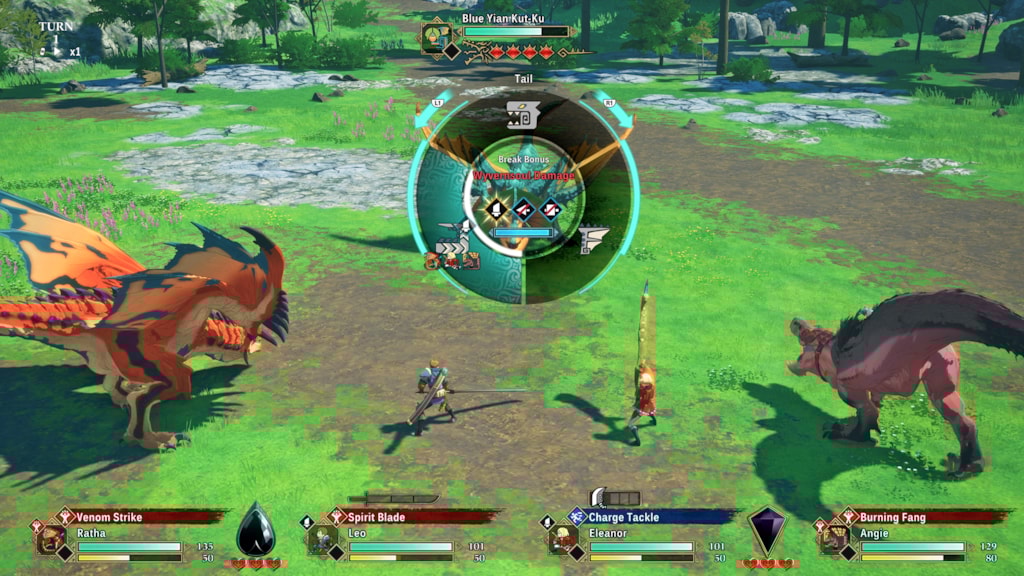
Weapons still play an important role, bringing familiar tools from the Monster Hunter arsenal into the turn-based system. Each weapon type carries unique skills and abilities that can dramatically alter the flow of battle, giving players multiple ways to approach encounters. These skills can be utilized alongside the combat triangle, and using these in tandem allows the player to have a bit of mastery over the flow of a fight. When you memorize the patterns of specific monsters, you can make short work of the encounter. Notably, you can quickly defeat enemies that you have a level advantage over by attacking them on the overworld, or using the Quick Finish feature when a battle starts.
While the protagonist is a huge focal point on the battlefield, players are never alone in these fights. Alongside the Rider is their loyal Monstie companion – monsters that have formed a bond with the player – and various party members encountered throughout the story. Together, they create dynamic battles that reward careful planning and smart use of abilities. Team-up attacks and Riding abilities are also keys to victory, and wielding these abilities at the right time can really save you both time and damage depending on how you choose to use them.
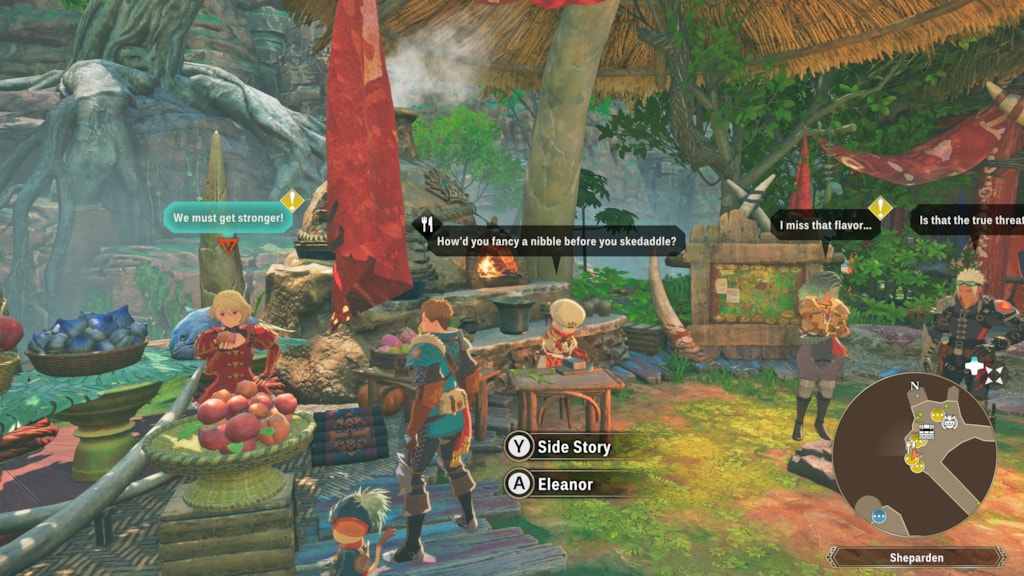
Beyond combat, Monster Hunter Stories 3 introduces several new systems that deepen exploration and progression. One of the most notable additions is the camping and cooking system, which allows players to set up camp while exploring the world. Preparing meals can grant temporary bonuses to the party, such as increased experience from battles, improved material yields when gathering resources, and other useful buffs that make exploration even more rewarding.
Crafting remains a cornerstone of the experience, staying true to the traditions of the Monster Hunter franchise. Players can forge new weapons and armor using materials gathered from monsters and the environment. As in other games in the series, elemental affinities play a major role – determining both how much damage players deal and how vulnerable they are to enemy attacks. Keeping old armor sets and weapons is often a good idea, as these can be upgraded later on as you get access to better parts and materials.
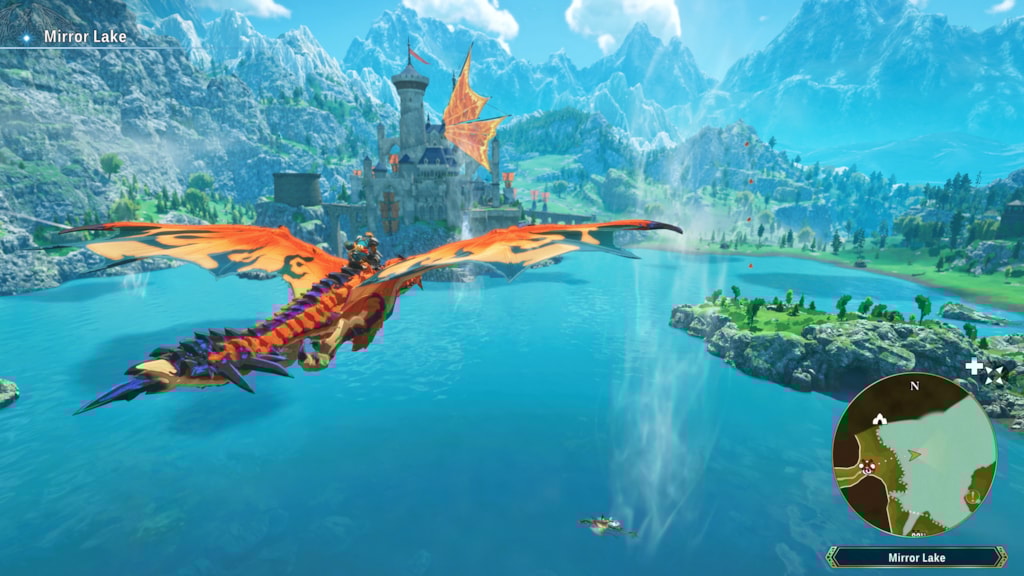
Combined with the ability to traverse large environments – often from the air with flying Monsties – the result is a gameplay loop that encourages exploration, preparation, and strategic combat. Since the player is constantly exploring Monster Dens for eggs and materials, we’ll also constantly be leveling and investing in companions. New to this game is also the ability to release monsters back into the wild and affecting the local ecology.
Each area in Monster Hunter Stories 3 has a specific elemental affinity, and as you release more and more monsters their rank will increase as they flourish. This can have interesting results when we release, say, a thunder element monster such as the Tobi Kadachi into a fire element territory. When we release enough of it and its rank climbs to S, we can see a variant version with the fire element start to appear. This becomes an incredibly satisfying incentive to keep hunting and hatching eggs so that you can discover more and more variant monsters.
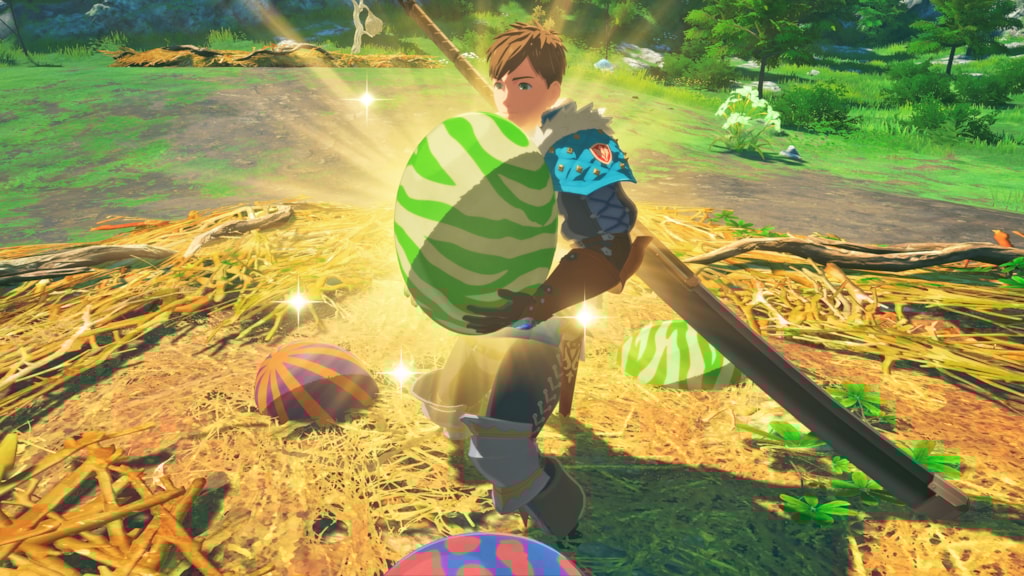
On Nintendo Switch 2, the game performs well overall and delivers a visually impressive experience. The world is vibrant and colorful, filled with lush environments that feel alive as you explore them both on foot and from the skies with your Monsties. That said, performance isn’t entirely flawless, and players may notice occasional dropped frames during certain moments, and environmental pop-in can occur when terrain details load in slightly after arriving in an area. Thankfully, these issues never significantly impacted my time with the game. They’re noticeable enough that even casual players may catch them from time to time, but for this reviewer, they rarely detracted from the overall experience.
In the end, what stood out to me most about Monster Hunter Stories 3 was its emotional storytelling and its focus on the ecological balance of the Monster Hunter world. While the series has always explored the bond between Riders and monsters, this entry leans into that theme with a sense of sincerity that felt wonderfully immersive and really sucked me in to the narrative. The world building in this game gave me an intense feeling of satisfaction. As a player that has engaged with Monster Hunter since Freedom Unite 2 on the PSP, this game was an absolute joy to me in terms of expanding on the universe that I know and love.
The opening moments alone set the stage for a journey defined by compassion and difficult choices. Watching the Queen ride into the night with the rescued Rathalos – choosing to save a life even if it meant leaving her own child behind – was genuinely moving. It’s a scene that stayed with me long after the controller was set down, and one that perfectly captures the heart of what Monster Hunter Stories is all about. Could I make a similar choice and forsake watching my child grow up in order to do what I knew in my heart had to be done? It’s tough to say. I think this story is one that I will carry in my heart for many years to come.

Monster Hunter Stories 3: Twisted Reflection is a wonderful evolution of the Stories set of spin-offs. After seeing its beginning on Nintendo 3DS, the leap forward in Monster Hunter Stories 2 on Switch, and now sitting down with another deep narrative that gives us an intense look at the lives of those who live in the world of Monster Hunter, I can genuinely say that I am excited and hyped to see what is next for this franchise.
Monster Hunter Stories 3: Twisted Reflection copy provided by the publisher for the purpose of this review.


