
Tales of Berseria Remastered review for Nintendo Switch
System: Switch
Release date: February 26, 2026
Developer: Bandai Namco
Publisher: Bandai Namco
My experience with Bandai Namco’s storied Tales of franchise amounts ultimately to my time playing Tales of Symphonia and Tales of Vesperia, two games I loved playing dearly a few years back due to several of their characters appearing in the Nintendo 3DS Project X Zone series of games and piquing my interest in learning about their original stories. After Namco’s recent remasters of the above mentioned Tales titles, I was excited to branch out and play some titles in the series I had yet to experience; Tales of Berseria was one of them. The slightly different style of JRPG gameplay and more intense storytelling appealed to me, and having the main protagonist be a female character was a cool switch-up to what I’d experienced previously and was curious how that would impact the way the story was presented. While the storytelling of Tales of Berseria is unquestionably the highlight of the game, this specific version perhaps has not done enough to justify a brand-new release with a ‘remaster’ title.
To go into detail on the game’s plot would be to take away one of the best parts of the game’s experience, so I will summarize relatively briefly. Three years after the extended prologue segment that establishes character dynamics and motivations, protagonist Velvet Crowe is forced to journey on a quest to meet a powerful man from her past named Arthur. On her journey to seek answers, she comes across fellow social outcasts and misfits who have their own circumstances and personal situations that mean they also choose to join Velvet on her adventure. Together, this band of unlikely crewmates set forth from land to land in search of answers, as well as to aid Velvet in her personal mission to find Arthur.
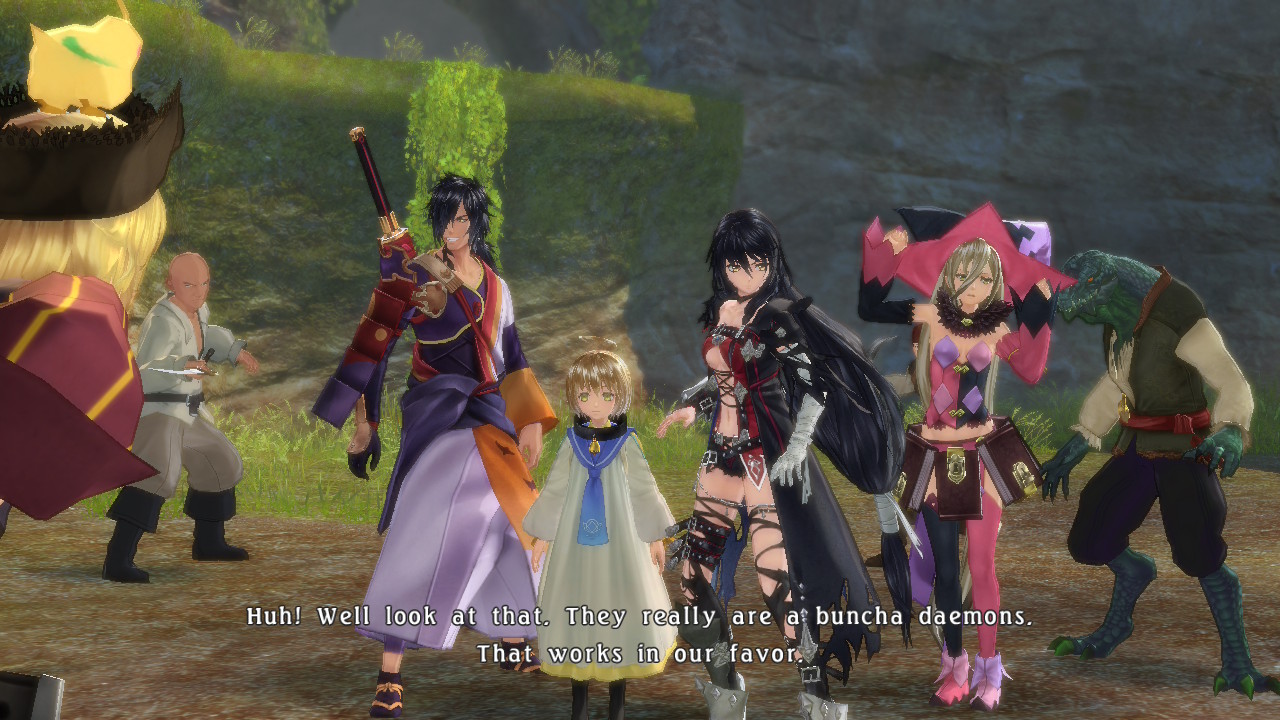
Velvet is an incredibly strong protagonist who almost feels more like an anti-hero in the way she carries herself and interacts with people around her, and as the story progresses, her story arc shifts to give us a better understand of why she thinks the way she does. Cristina Vee (of Shantae fame) does a stellar job playing her, and almost feels like she’s playing two different characters within Velvet, both a badass who strikes fear into the enemy, as well as a tender young woman who finds it hard to open up to others. Each side of Velvet is entirely believable and engages the audience, and that’s in large part due to Vee’s performance. I only played briefly in Japanese just to get a feel of the difference in performance, but likewise Rina Sato (voice of Misaka Mikoto in the Magical Index/Scientific Railgun series) does a stellar job playing the lead role of Velvet. She is the character who speaks most, as we often hear her inner-monologues, so the casting directors deserve massive credit for nailing both the English and Japanese voice actor selections. Regardless of which dub you choose to play the game in, you won’t go wrong.
Gameplay is still somewhat similar to titles preceding Berseria in the series in which the party of characters level up from battles in large overworlds they explore, complete quests in, and speak with NPCs to get an idea of where to go in order to continue the plot. There is a map players access which marks different shops, inns, and areas that lead to dungeons players venture through. Chests are scattered around the maps and dungeons, with the different colors indicating what level of rewards they will gift the player. There is light puzzle solving elements to the dungeons, and collectable items that can be found which can heal the party through either consumption or engaging with the cooking mechanic to heal the wider party. Players can swap between a few different characters in gameplay, but truthfully I just stuck largely with Velvet because I had grown accustomed to her style of fighting from exclusively using her the first few hours of gameplay. The movement speed of characters outside combat is relatively fast, but still sometimes feels quite sluggish when in large open-areas or having to backtrack.
I was deeply concerned about being incredibly frustrated with the amount of backtracking involved in the first three to four hours of gameplay, where there was no way of speeding back to previous locations bar manually doing so, but thankfully not long after a mechanic is unlocked that allows for fast travel between areas. This significantly mitigates this issue, but the amount of warping then becomes a bit of a pain because of how frequent it is. This apparently was something that was unlocked much later in the original release of the game, and was pushed forward to an earlier unlock in this remaster due to pacing complaints with the original release. While these pacing issues do remain, they are significantly better than what was there before and is one of the biggest additions to playing this version of the game.
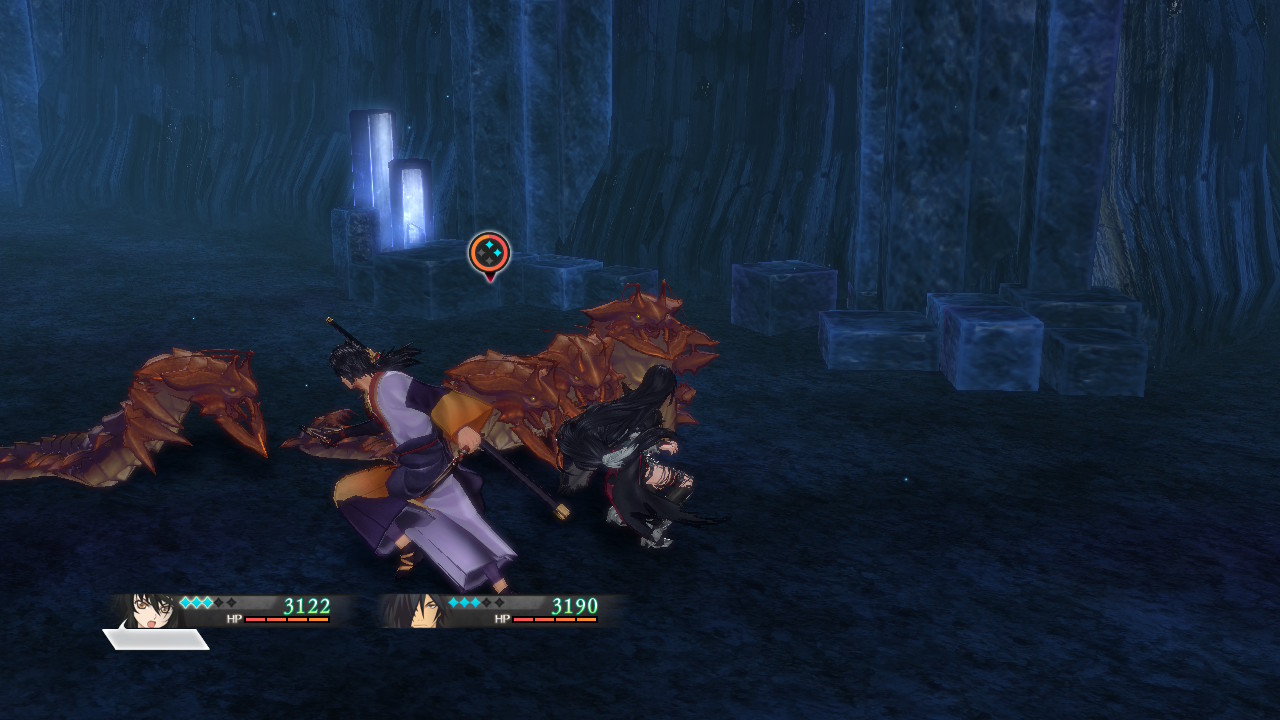
Unique to this game compared to other Tales titles is that the battles during your playthrough are not on a turn-based system, but rather in an arena-like area where players move freely around enemies before initiating combo routes. Combo routes can be altered in the Artes menu, where the player can choose which attacks they unlock from leveling up are activated in one repeated button press change. This freestyle combat was very fun at first, but after a while I settled into a combo route that I felt was effective against most enemy types that I encountered. Enemies have different weaknesses that alternating move lists frequently allow for defeating more easily, but I found the game was still easy enough to play through without tinkering with the Artes change-up system too much. Likewise, the armor and weapon customization was not something I actively sought out to get involved in. I would just equip the strongest weapons or gear I found and put it on the party members as I continued. Like most JRPGs, different characters in the parties have different strengths and weaknesses, but the difficulty felt relatively low on the Normal difficulty, but more challenging difficulties can be unlocked that make enemies tougher but reaps better rewards in item drops.
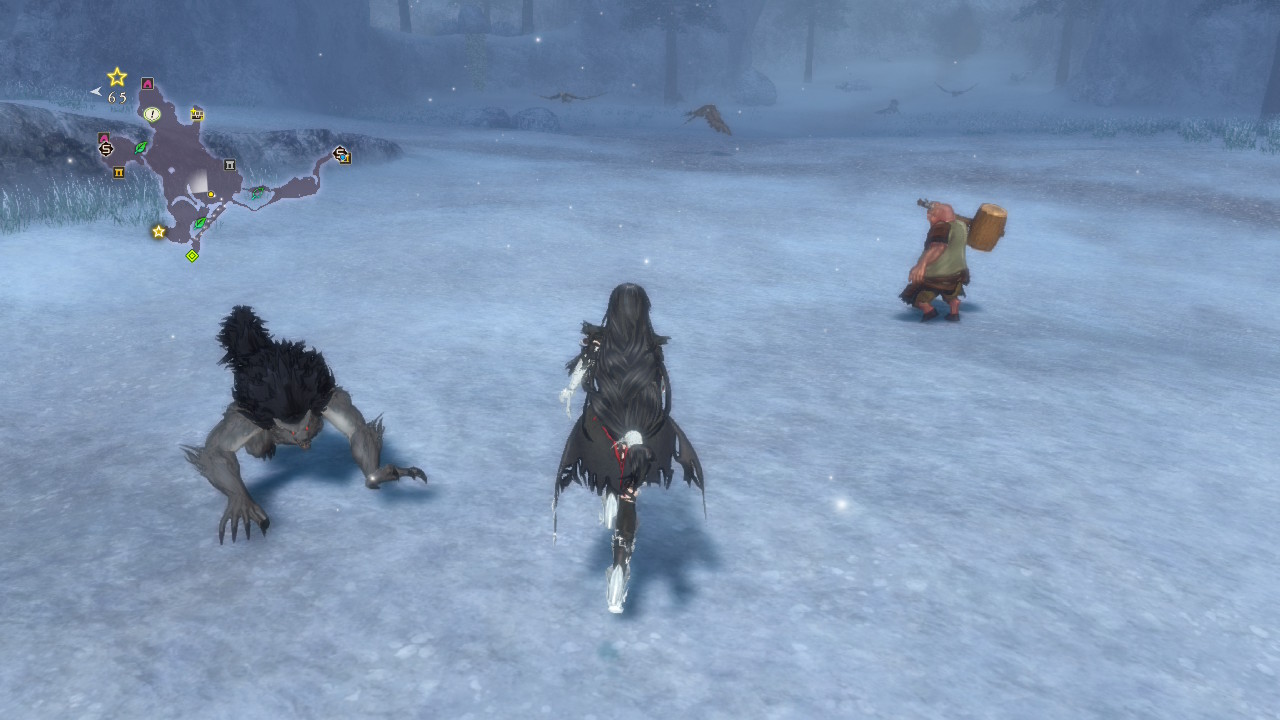
Aside from the main ‘Theme of Velvet’, which is a stellar composition, and the bizarre memorable nature of Magilou’s theme, ‘Magilou, the Great Sorceress’, I found the majority of the soundtrack pretty forgettable and although it suited the atmosphere the game was going for and felt like it suited the different environments of the dungeons, nothing ever really stood out and nothing really hit me in the same way tracks from Symphonia or Vesperia did. Aside from the (admittedly improved) monotony of constant backtracking and warping, my biggest issue with the game is that a lot of it visually is not appealing at all. Despite being a high-seas adventure exploring different lands, every dungeon felt like a bland, color-less void and the actual visual quality of the game was not at all attractive.
It isn’t a stretch to say the game looks like a PS2 adventure at times with constant pop-in and weak looking environments. The character models look a little sharper than that, but for a game carrying the ‘Remastered’ title, nothing feels visually improved and if not for the stellar voice acting and narrative direction, I likely would have felt it was too dull to carry on playing as the gameplay cycle became quite comfortable a few hours in. Frame rate is at 30 FPS, so those expecting 60 should come in with that in mind. On the plus side, the performance is very solid and the gameplay differences between docked and on TV mode are relatively minimal and flow perfectly fine on both styles of playing the game. If you wanted to play Berseria for the first time on the go, you won’t be disappointed with the quality of the game. Having access to this title on modern consoles is also welcome, but one can’t help feeling a little disappointed there wasn’t more effort put in despite changes that were put in (which you can read about here).

Tales of Berseria Remastered is a title with, at first, pretty entertaining gameplay mechanics, a fantastic world with tremendous characters, and a truly outstanding story to tell. As the adventure carries on, however, the cracks start to show more and more, and save for the fantastic plot, characters and voice performances, things start to feel more like a slog broken up by fun boss battles and memorable cutscenes. I can’t in good conscience call this a proper remaster, because it really isn’t – it is a port with some quality of life changes and slight visual upgrades in backgrounds and character models. The amount you will get out of this game will be relative to how much the story grabs you, and for me at least, it grabbed me just enough to make everything else feel worth it.
Tales of Berseria Remastered copy provided by the publisher for the purposes of this review.


