
Physical vs. digital games on Nintendo Switch 2 – advantages and disadvantages
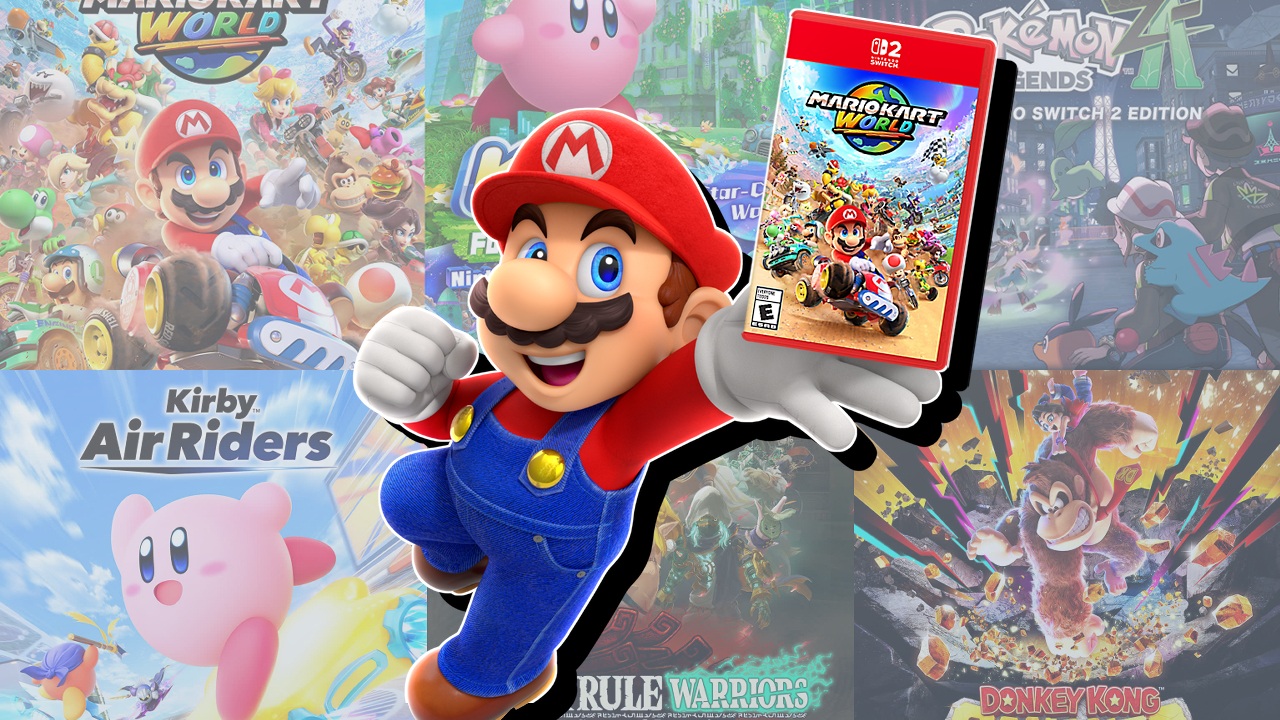
It’s 2026, and with each passing year, physical media is phased out just a little bit more – which is why it’s so important that we try to preserve it! Of all three major video game companies, Nintendo has generally made the best effort to preserve its own physical media – with just one exception. Indeed, despite rising manufacturing costs, most of Nintendo’s first and second party offerings are available physically on Switch 2 with no strings attached. And even though that should be kind of a baseline expectation at this point, it’s refreshing to see at least some companies trying to sell physical media. So today, we’re talking about the advantages and disadvantages of physical and digital media, and of course going over the dreaded Game-Key Cards while we’re at it.
Nintendo’s digital history
In 2012, digital gaming was something all-new to me. This was mainly because Nintendo had never done it prior to that point, for the most part. Indeed, way back in August 2012, the first-ever retail game Nintendo ever put on the eShop was New Super Mario Bros. 2 on the 3DS. I was only around 13 years old at the time, and I remember thinking how novel it was to be able to download a full game without having to leave home. At this point, I had never really gone to a physical store for the launch of a new video game. And that wasn’t always possible for me even if I wanted to! So starting at around this time, pretty much every game I got was digital. And given how small Nintendo 3DS file sizes were, it was easy to store a whole bunch of games on your system. Plus, organizing them within folders and moving their icons around was fun all by itself.
For the Wii U, things were a little different. If I’m remembering right, you had to have an external hard drive with a Y-cable in order to provide enough power to the drive. Not to mention that Wii U games were of a much larger file size, which made them a bit tougher to store. The basic Wii U bundle had 8GB of storage, whereas the deluxe set had 32GB – both very, very small amounts. Unfortunately, the Wii U’s physical games are reported to have an even bigger flaw: disc rot. I can actually attest to this myself – a few of my Wii U games stopped working sometime around 2016, where they’d either pop up with an “invalid disc” message or fail to read outright. Of course, this could be something other than disc rot, but I’ve seen several reports of physical games ceasing to function supposedly due to rotting over time. And given that the Wii U’s servers are gone now, physical Wii U games aren’t in a great place – they’re generally pretty cheap on resale save for a few rare games, but they’re missing updates and some discs may stop working after many years.
It’s a good thing, then, that Nintendo Switch uses cartridges instead of discs. Though their write speed is still rather low, it’s much easier to carry a case full of carts than a case full of discs. Carts are also much more durable (but don’t try to test that out yourself). At the moment, we don’t really know how long Nintendo Switch cartridges will last, but they’re at least fun to collect. With that said, though, I picked up a Nintendo Switch in June 2017, and from that point onward I was 100 percent digital for the console’s entire lifespan. I expected that to remain the same with Nintendo Switch 2, but surprisingly, I’ve been finding myself more likely to purchase physical carts. And that’s mainly because storage is now much, much more expensive – microSD Express cards are still new, and 1 TB versions are almost $200. Normally, I’d say the price on these would go down over time – but given how prices on storage are going up thanks to all these companies hogging RAM and such for AI data centers, who knows how likely that is.
All this is to say, though: I get it now. For most of Nintendo 3DS’ lifespan and all of the Switch’s, I thought the convenience of digital games outweighed ever owning them physically. But having an actual case you can hold in your hands and a cartridge you can pop into your system with a satisfying clink is definitely a point in physical games’ favor. For me personally, I tend to buy games physically if they’re ones I’ll play through just once or twice, and don’t need saved on the system – Metroid Prime 4, Cyberpunk, and Breath of the Wild being just a few examples. And all of these games take up lots of storage space, making them great physical options. Games that I play multiple times a week, like Animal Crossing or Pokemon, I tend to download instead. Nintendo games these days get a whole lot of updates, too, which further increases the file size of games. Of course, when a physical game receives an update, that update is saved on the system and not the cartridge. However, many new Nintendo games have a huge file size and are great candidates for physical – Mario Kart World and Kirby Air Riders are both around 25GB, while both Switch 2 Editions of Zelda are very large with Breath of the Wild being around 25GB all by itself.
The problem with game-key cards
Of course, Nintendo Switch 2 has the very unique issue of game-key cards, something no other platform has. While seasoned collectors (understandably) hate this idea, here’s a quick explanation for anyone unfamiliar. Many “physical” Nintendo Switch 2 games are sold as game key cards, which are cartridges you insert into your system just like normal. However, once it’s in your system, you have to actually download the full game from the internet – the cartridge is merely a license that lets you download it. So compared to buying a game digitally, the one and only “plus” of a game-key card is that you can resell it when you’re done playing. Unfortunately, they have numerous weaknesses: for one, none of the game data is on the cartridge, so a lot of physical games actually don’t have a true physical version. Furthermore, you also need to have the key card inserted into your system if you want to play the downloaded title. Further furthermore, when Nintendo Switch 2’s servers eventually go down, none of these cards will be able to download, so all of their value will disappear in an instant.
That said, for many developers, game-key cards are a necessary evil. Nintendo has managed to put most of its first and second-party games on standard physical carts, but for more visually and memory-intensive titles, cartridge write speeds are just too slow. Games run much faster off of microSD Express cards, which is a necessity for things like Final Fantasy 7 Remake. Unfortunately, Pokemon Pokopia, which releases in March, is the first major Nintendo title to be on a game-key card. Koei Tecmo is heavily involved in its development, and it also made Hyrule Warriors: Age of Imprisonment, which strangely is not on a game-key card and has a standard physical release. We don’t know what happened with Pokopia. Is it because they simply didn’t want to manufacture units? Is it because the game somehow requires a high write speed that cartridges can’t use? Who knows. But it does potentially create a problem for physical collectors. I feel like, eventually, Switch 2 games from Nintendo will need microSD Express-level speeds. When and if that happens, they’ll need to either switch over to game-key cards themselves or manufacture new cartridges with increased write speeds. Who knows what they’ll wind up doing.
All of this is to say, if you’re at all interested in physical media, it’s a great time to support it. A few third-party games, like Cyberpunk 2077 and Hades 2, are complete on cart without any game-key card shenanigans. And even as someone who mostly sticks to Nintendo games, third-parties putting their games on cart makes me more likely to buy and support them. I’m sure many of you feel the same! In the meantime, do you buy more physical games, digital games, or is your collection evenly split between both? Let us know in the comments down below.


